
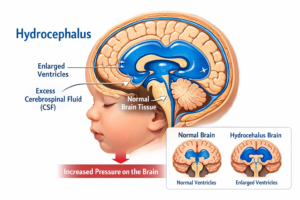
Hydrocephalus
What is Hydrocephalus?
Hydrocephalus is a neurological condition in which excess cerebrospinal fluid (CSF) builds up in the brain’s ventricles, increasing pressure inside the skull and affecting normal brain function, especially in infants and children.
Causes
Hydrocephalus may be:
Congenital (present at birth) due to genetic or developmental problems.
Acquired later due to infections, brain tumors, head injuries, or bleeding in the brain.
Symptoms
Common symptoms include:
- Rapid head growth in infants
- Headaches
- Vomiting
- Vision problems
- Balance difficulties
- Developmental delays
Diagnosis
Doctors diagnose hydrocephalus using ultrasound, CT scans, MRI scans, and neurological examinations.
Treatment
Treatment usually involves surgical procedures such as shunt placement or endoscopic third ventriculostomy (ETV) to drain excess fluid and reduce pressure on the brain.
Prognosis
With early diagnosis and proper treatment, many children with hydrocephalus can live healthy and active lives.