
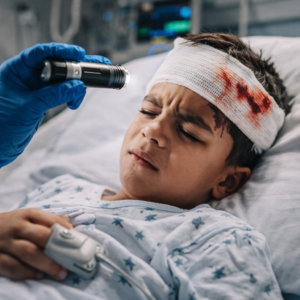
Head Injury / Brain Trauma

What is Head Injury / Brain Trauma?

Head injury or brain trauma occurs when a strong impact or blow to the head affects the brain’s normal function. It can result from accidents, falls, sports injuries, or road traffic incidents.

Causes

Common causes of head injury in children include:

  • Falls during play or daily activities
  • Road accidents
  • Sports injuries
  • Physical trauma or impact to the head

Symptoms

Symptoms may vary depending on the severity of the injury and may include:

  • Headache
  • Vomiting
  • Dizziness or confusion
  • Loss of consciousness
  • Balance or vision problems

Diagnosis

Doctors diagnose head injuries through physical examination, neurological assessment, CT scans, and MRI scans to evaluate possible brain damage.

Treatment

Treatment depends on the severity of the injury and may include observation, medication, or neurosurgical procedures in serious cases to relieve pressure and protect brain function.

Frequently Asked Questions (FAQs)

1. What is a head injury or brain trauma?

A head injury or brain trauma occurs when a blow, bump, or impact damages the skull, brain, or surrounding tissues.

Common causes include falls, sports injuries, road traffic accidents, and other traumatic incidents.

Warning signs may include loss of consciousness, repeated vomiting, severe headaches, seizures, confusion, or unusual drowsiness.

Immediate medical attention is needed if a child loses consciousness, has seizures, persistent vomiting, difficulty waking up, or abnormal behavior.

Diagnosis may involve a physical examination, neurological assessment, CT scans, or MRI scans to evaluate the extent of injury.

No. Many minor head injuries can be managed with observation and supportive care, while severe injuries may require surgical treatment.

Many children recover well with timely diagnosis and appropriate treatment, although recovery depends on the severity of the injury.

Parents should consult a pediatric neurosurgeon if a child has a severe head injury, persistent neurological symptoms, or abnormal findings on brain imaging.

Related Services